The Real Job
Dan & Angela's Barndominium, Dodd City
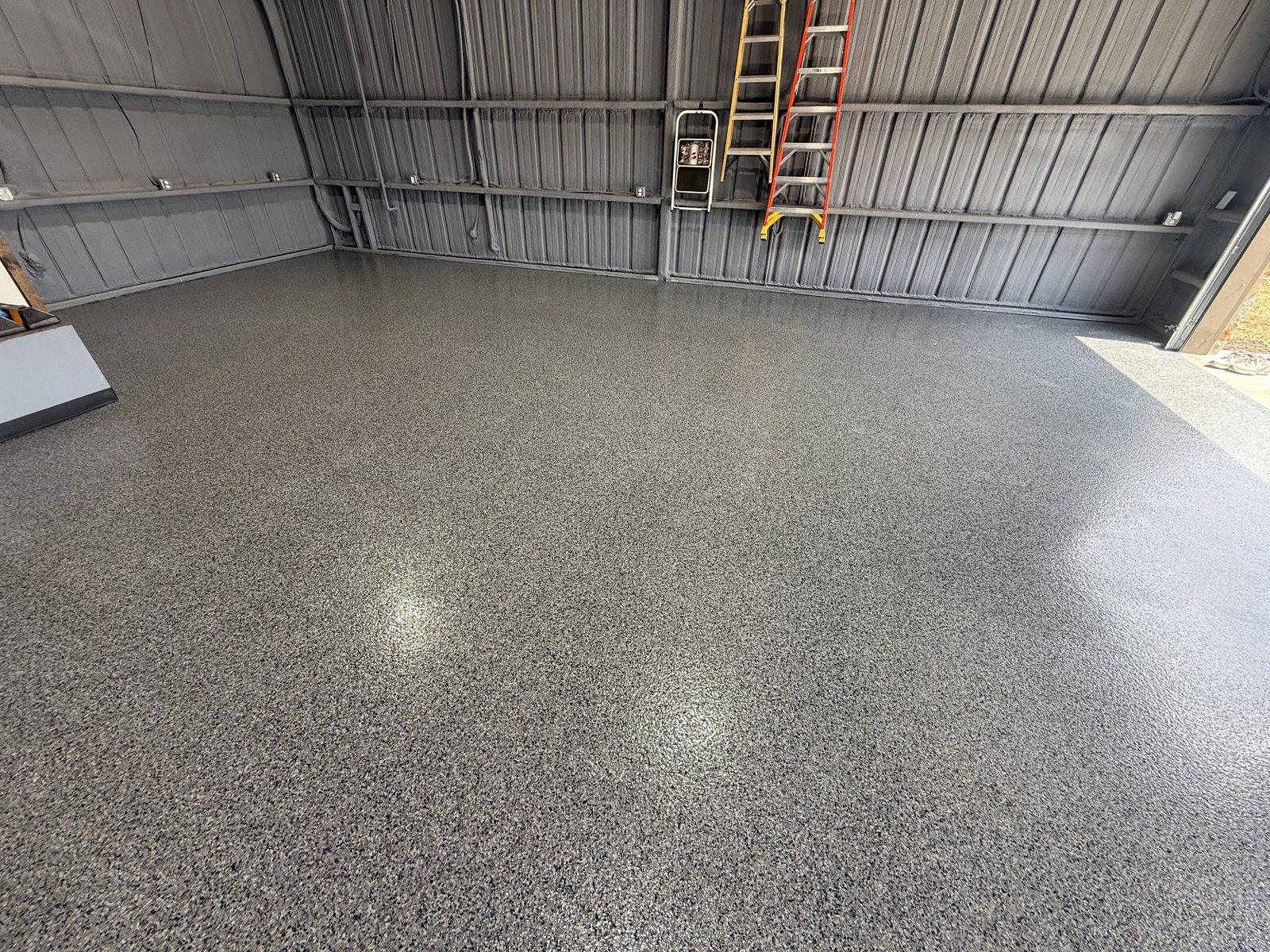
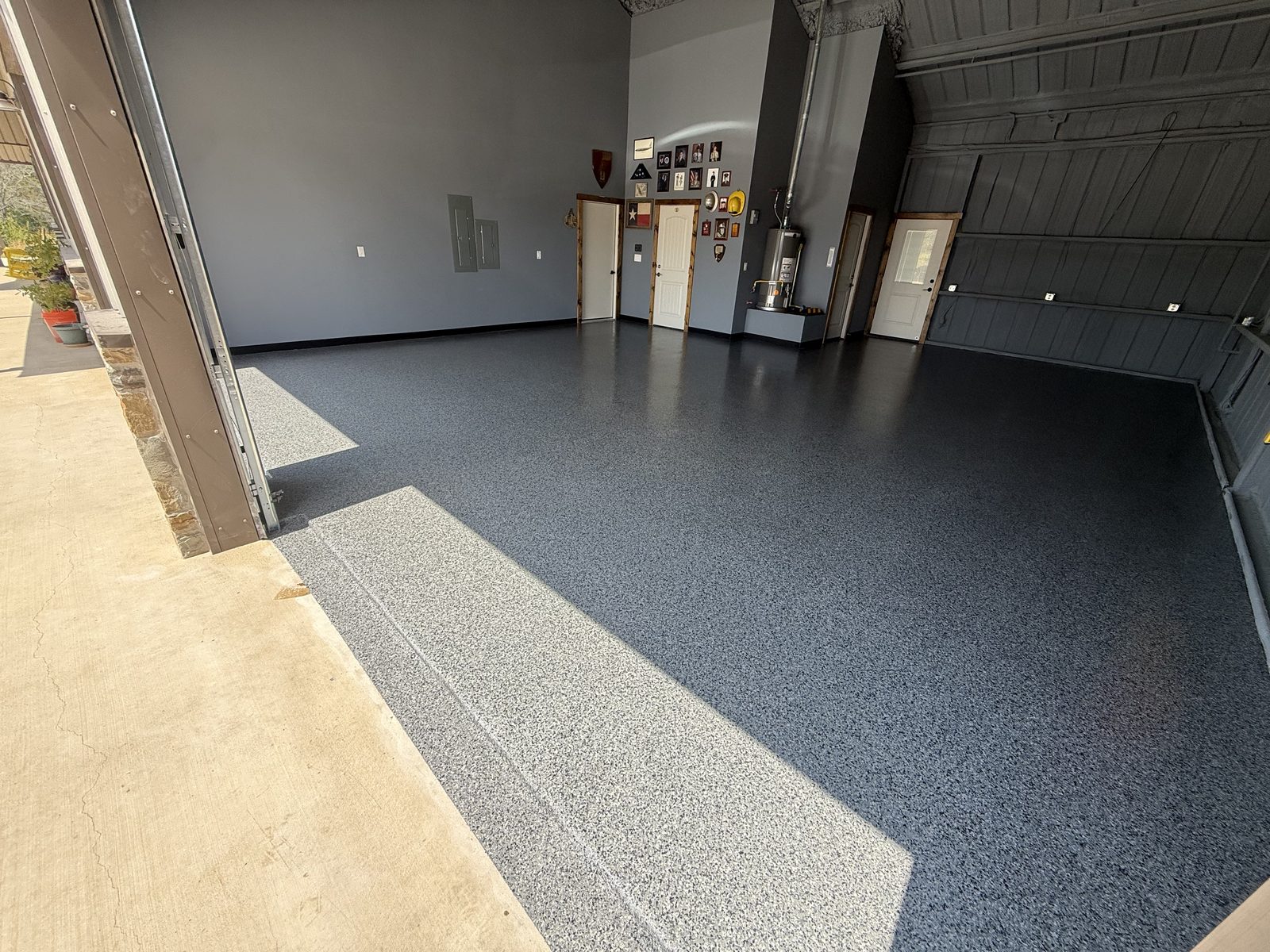
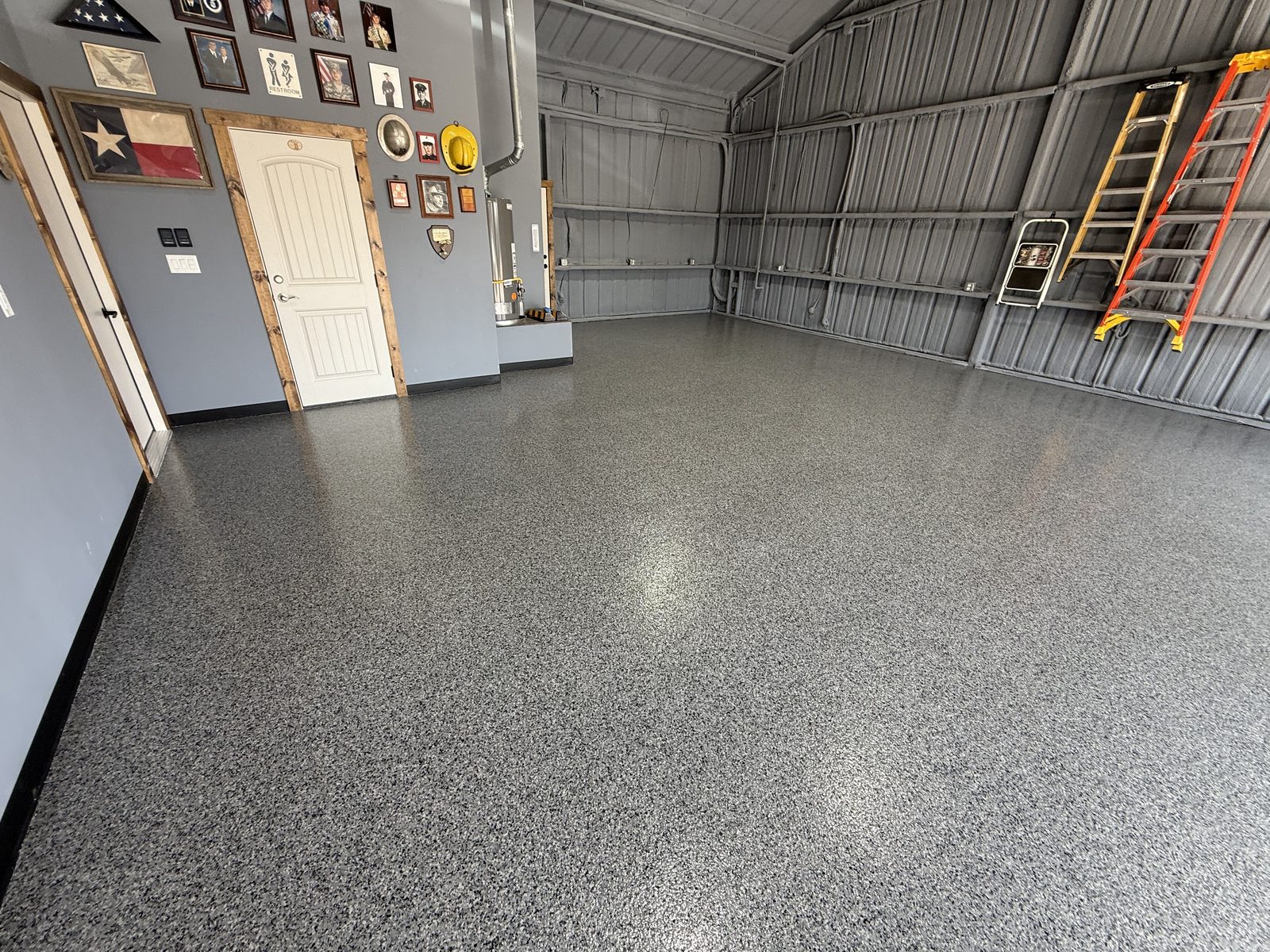
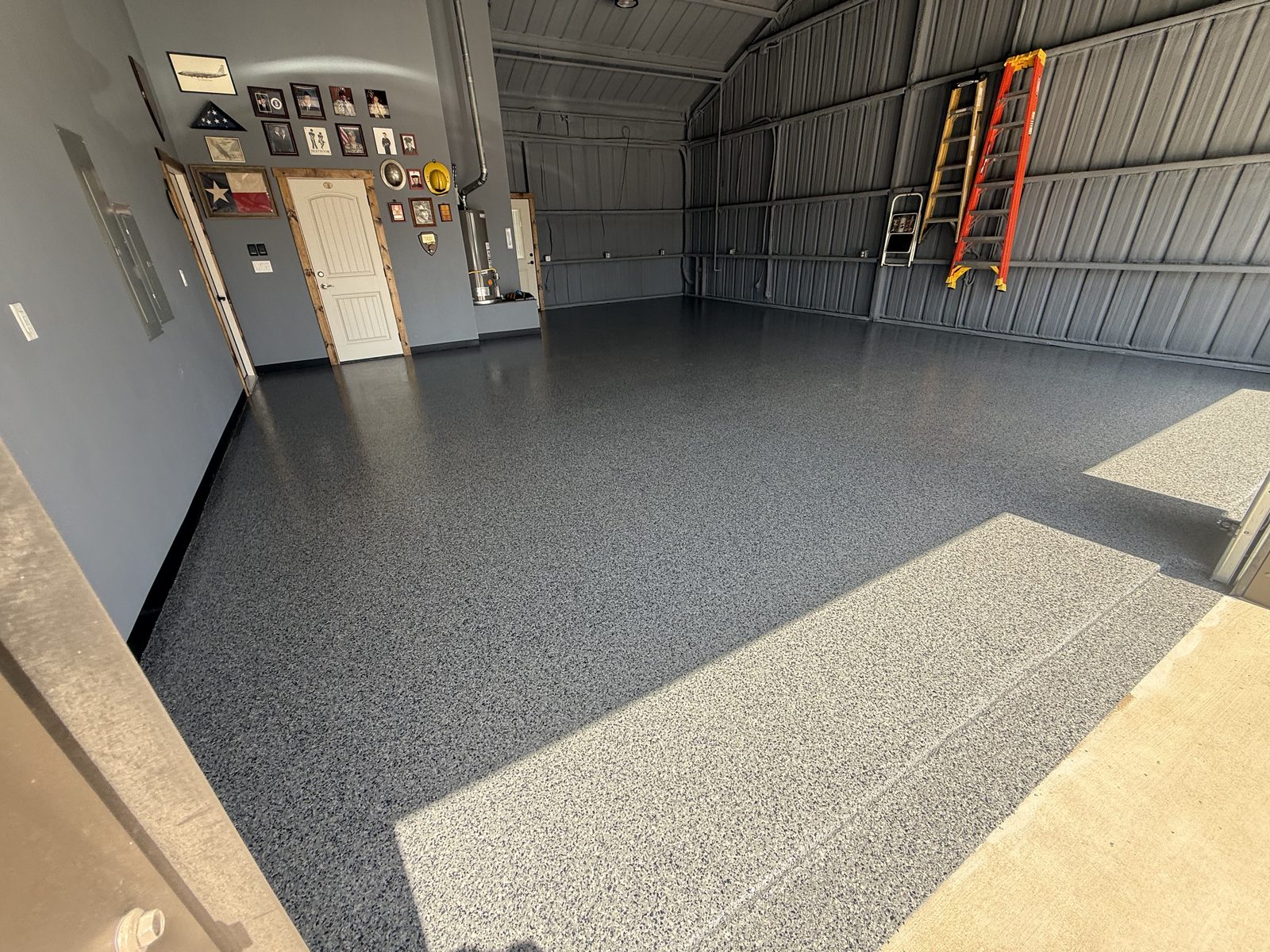
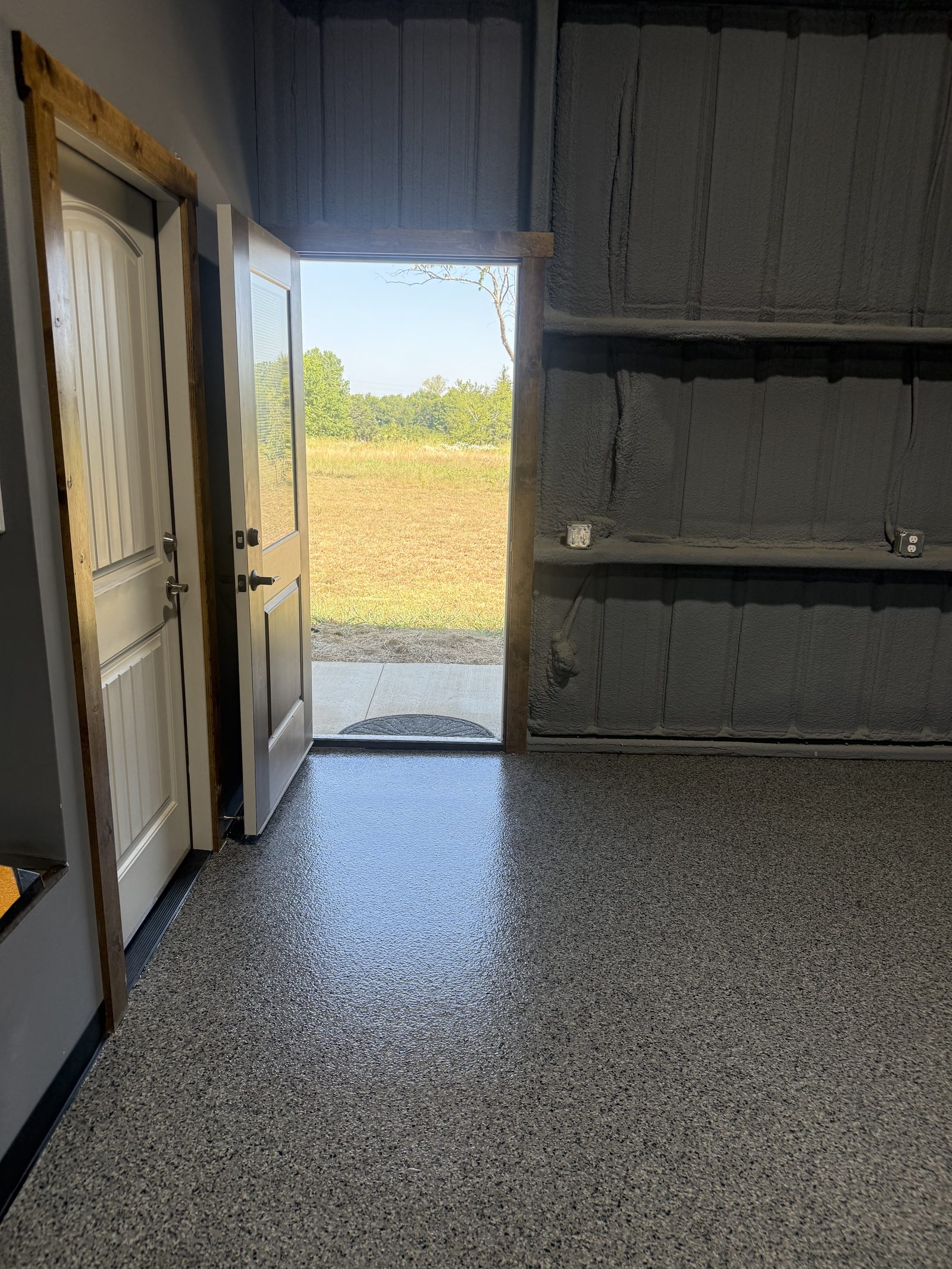
A real barndominium floor, ground to raw concrete, flaked to full rejection, and coated clean out to the overhead door. Here is exactly how it came together, and how The Epoxy Company builds every floor out this way.
Dodd City sits out in Fannin County, a few miles south of Bonham and not far from Honey Grove, the kind of small town where a barndominium on a few acres is a normal way to live rather than an exception. Dan and Angela built theirs the way a lot of folks out here do, room to breathe, a big shop and garage under the same roof as the house, and concrete underneath that was going to see a lot of hard use for a long time. When it came time to coat that concrete, they did what smart buyers do and got more than one bid.
They picked The Epoxy Company, and this page walks through exactly what we did on their floor, the materials we used, the numbers behind the job, and what Dan had to say about it once the topcoat cured. Nothing on this page is a stock photo or a marketing mockup. Every picture is this floor, in this barndominium, in Dodd City.
Dan and Angela reached out about the garage bay on their new barndominium. They had done their homework and gotten a few bids, and they wanted the floor done right, not just done cheap. That is the whole operation here. We are not the cheapest bid in Fannin County and we do not try to be. We put down a floor that stands next to anybody's top-tier work, at a fair price, on a handshake that still means something out this way.
A barndominium garage is a little different from a standard suburban two-car. The bays tend to run bigger, the concrete is often a heavier commercial-grade pour since it is carrying tractors, trailers, and shop equipment as much as pickup trucks, and the building itself is metal, which changes how the slab was cured and how it behaves with temperature swings. None of that is a problem for a proper diamond grind. It just means we read the concrete a little more carefully before we ever start cutting.
Every floor starts with a diamond grind, no exceptions, no acid wash shortcuts. We open the concrete up so the coating bonds mechanically into the surface instead of just sitting on top of it, waiting for an excuse to let go. This slab was hard, dense concrete, right around 6,000 PSI, so after grinding it took a smooth, tight profile that held the base coat exactly the way we wanted.
Before we ran a single pass we checked the slab for moisture, since a barndominium sitting on Fannin County clay is exactly the kind of ground that can push vapor up through a slab if you are not paying attention. This one tested clean, but we do not skip that check on any job, because the alternative is a coating that looks perfect for six months and then bubbles or delaminates once the ground underneath cycles through a wet season.
Then we brought the coating all the way out to where the overhead door comes down. Door closed, you cannot see a bit of bare concrete from inside or out. Some folks say that finished edge looks like a little waterfall, and out here where a shop floor is on display as much as a living room, we will take that description every time.
We ran a Simiron 1100 SL base coat, a 100% solids slow-cure epoxy in Haze Gray, over the freshly ground slab. Slow-cure matters here. It stays open and workable longer than a fast-cure product, which gives it time to fully wet out and self-level into every bit of the diamond-ground profile before it starts to set, instead of skinning over in under an hour the way the fast-cure products some crews reach for do just to turn jobs faster. That extra working time is also what let a single careful installer get the whole floor right without racing the clock.
Torginol Nightfall flake went down over that base, broadcast to full rejection, meaning we kept throwing flake until the base coat could not physically hold any more. That is the difference between a floor that looks lightly sprinkled with flake and a floor with a true, dense, professional broadcast. Once it set, we scraped the flake back four different passes so the finish came out even and locked in, no high spots or bald patches.
On top of that went a heavy-build polyaspartic topcoat, run extra-slow-cure for the same reason as the base. Most crews stretch topcoat thin to save on product cost. We go the other way and pour it on heavy, so you get more chemical, more film build, and more actual floor protecting your investment. The number that matters here is coverage: roughly 100 square feet per gallon on the topcoat, which is a heavier pour than a lot of competitors run. That heavier build is what shrugs off hot tires, dropped tools, oil, and shop chemicals for years instead of months, and it is why this floor cleans up with nothing more than a mop.
A flake floor has real texture on its own, and the polyaspartic topcoat is rated for traction, so it holds up well underfoot even in a working shop environment. For anyone who wants even more bite, maybe a shop where oil or water on the floor is a daily reality, we can add an aluminum oxide anti-slip additive to the topcoat for a little more per square foot and dial the grip in right where it is needed.
A garage bolted onto a suburban house and a shop bay under a barndominium roof are not the same floor, even though both jobs get called "epoxy garage flooring." Metal buildings move differently than a stick-built house. The roof and walls expand and contract more with the Texas heat, and that shows up as bigger daily temperature swings inside the building than you would ever see in an insulated attached garage. Concrete does not love rapid temperature change, and neither does a coating sitting on top of it, so we pay attention to slab and ambient temperature before we ever mix a batch, not just on the day we grind but on the day we coat.
Barndominium slabs also tend to be poured heavier and denser than a standard residential garage floor, because the building is expected to carry more than two cars. Dan and Angela's slab tested around 6,000 PSI, which is well above what you would typically find under a house, and dense concrete like that grinds differently than a softer, older residential pour. We adjust our diamond bond, our grit sequence, and our number of passes to match what the concrete is actually giving us back, rather than running the same canned process on every job regardless of what is underfoot.
Then there is scale. A lot of barndominium bays run bigger than a two-car garage, sometimes closer to a small commercial shop, which means more square footage moving through mix, pour, and cure on the same working day. We plan the batching and the pour sequence around that instead of trying to squeeze a bay this size into a schedule built for a small garage, because a rushed pour on a floor this size is exactly how you end up with lap lines and uneven flake density.
Dodd City is a small unincorporated community, the kind of place where the nearest stoplight is a drive and the property next door probably has a tractor parked on it. Floors out here are not showpieces sitting empty most of the week. They see trucks and trailers pulling in with mud still on the tires, propane tanks and fuel cans set down without much thought, welding sparks, dropped tools, and the occasional livestock feed bag torn open on the concrete. A floor that cannot take that kind of daily abuse is the wrong floor for Fannin County, no matter how good it looks in a showroom.
That is part of why we do not cut corners on the topcoat here. The heavy-build polyaspartic we ran on this floor is chemical resistant to the fuel, oil, and shop chemicals that actually end up on a rural garage floor, not just the light detergent spills a marketing photo shoot might show. It is UV stable too, which matters more than people expect on a barndominium, since those big overhead and bay doors let in a lot more direct sunlight than a typical attached garage door ever would.
Clay soil is the other constant out here, and it is worth repeating because it is the single biggest reason we see coating failures on properties we get called out to fix after somebody else's install. Fannin County clay swells when it is wet and shrinks when it dries, and that movement pushes moisture vapor up through a slab in a way sandier soils do not. We test for it before we coat, and on our Pro and Flagship systems we run a moisture vapor barrier primer specifically because of what this soil does. It is the difference between a floor that is still flat and bonded in ten years and one that is bubbling at year two.
A properly installed polyaspartic system is genuinely low maintenance, but low maintenance is not the same as no maintenance, and a little bit of care goes a long way toward getting the full lifespan out of a floor like Dan and Angela's. For everyday dust and light dirt, a dry microfiber dust mop or a soft push broom is all you need, since the smooth, sealed topcoat does not let grit grind into the surface the way bare or sealed concrete does. When it actually needs a wash, warm water with a splash of Simple Green or a mild dish soap and a soft-bristle brush handles almost anything a shop floor sees.
Power washing is fine on a cured polyaspartic floor, and a lot of our barndominium customers use it regularly since they are already hosing off trucks and equipment nearby. Just keep some distance between the nozzle tip and the floor, and avoid parking the stream directly on a seam or edge detail for an extended period. For the chemicals a working shop actually deals with, oil, transmission fluid, brake fluid, fertilizer, and battery acid, the rule is simple: wipe it up when you see it. This system is chemical resistant, meaning it will not eat through or discolor on contact the way bare concrete does, but resistant is not the same as immune, and a puddle left sitting for days is still asking more of the coating than it needs to.
Beyond that, there is not much to do. No waxing, no resealing every couple of years, no special cleaners to keep in stock. If a heavy piece of equipment ever does mark the surface, or a jack stand leaves a dent under real weight, that is a spot repair, not a floor replacement, and it is one more reason we stand behind every install with a real warranty instead of a marketing promise.
Every install we run, garage or barndominium, starts with diamond grinding and ends with a polyaspartic topcoat. The difference is in the layers.
Every contractor promises a great floor. Here is what we actually do differently, especially on rural and barndominium properties.
"We did a lot of research before selecting The Epoxy Company for our barndominium near Dodd City. Jeremy was easy to communicate with, very responsive, and showed up when he said he would. He was meticulous about the floor prep and took the time to cleanly cut in around our cove base trim. He uses quality materials and equipment, and even though his rates are very reasonable you still get top-notch results like you spent twice the amount. I won't hesitate to recommend him to anyone looking for epoxy flooring."
The Epoxy Company installs epoxy and polyaspartic floors throughout Dodd City and the surrounding Fannin County area. Not seeing your town? We cover all of North, East & Central Texas, just ask.
Yes. The Epoxy Company is based in Denison and covers Dodd City, Bonham, Honey Grove, and the rest of Fannin County. Barndominiums, garages, and shop floors are what we do best, and being a smaller town never means a longer wait for a free estimate.
Barndominiums are a big part of what we do, especially out toward Dodd City and the rest of rural Fannin County. Metal building slabs, oversized garage bays, and shop floors all get the same diamond grind and full system as any residential garage.
Most barndominium and garage floors run $6 to $10 per square foot installed, depending on the package. Larger bays and shop floors can see a lower per-square-foot rate simply because of the total square footage. Every estimate is free and based on your actual concrete.
Dry, our flake floors have real texture and a polyaspartic topcoat rated for traction, so they hold up well underfoot. Any hard floor can get slick when wet, so spills should be wiped up. We can add an aluminum oxide anti-slip additive to the topcoat for extra grip.
Simple Green and a microfiber mop for everyday cleaning. For tougher spots, warm water, a little Dawn, and a soft brush. You can power-wash it, just keep some distance with the nozzle. Wipe up oil, chemicals, and battery acid promptly since the floor is stain-resistant, not stain-proof.
Slow-cure epoxy stays open longer, so it has time to fully wet out and self-level into the diamond-ground concrete before it gels, instead of skinning over in under an hour like the fast-cure products some crews use to turn jobs faster. That extra working time is what let one careful installer get this whole floor right.
We treat them differently, yes. Metal buildings see bigger daily temperature swings than an insulated attached garage, and barndominium slabs are often poured heavier and denser to carry equipment and trailers. We adjust our diamond grind, our grit sequence, and our coating schedule to match what the concrete and the building are actually doing, instead of running one process on every job.
Dust mop or sweep for everyday dirt, and use warm water with a mild soap and a soft brush for anything tougher. Power washing is fine once the floor is cured, just keep some distance with the nozzle. Wipe up oil, fuel, and shop chemicals when you see them rather than letting them sit. There is no waxing or resealing required with a properly installed polyaspartic system.
Free estimate anywhere in Fannin County and the rest of North, East & Central Texas. We come to you, read your concrete, and give you an honest recommendation with no pressure.